INCIDENTS & SAFEGUARDING

Incident reporting software for UK care homes

Accident and incident reporting for care homes: falls, injuries, medication errors, safeguarding concerns and near misses logged from the floor, then followed through investigation, actions and lessons learned — with the trends a governance meeting needs.

The whole system
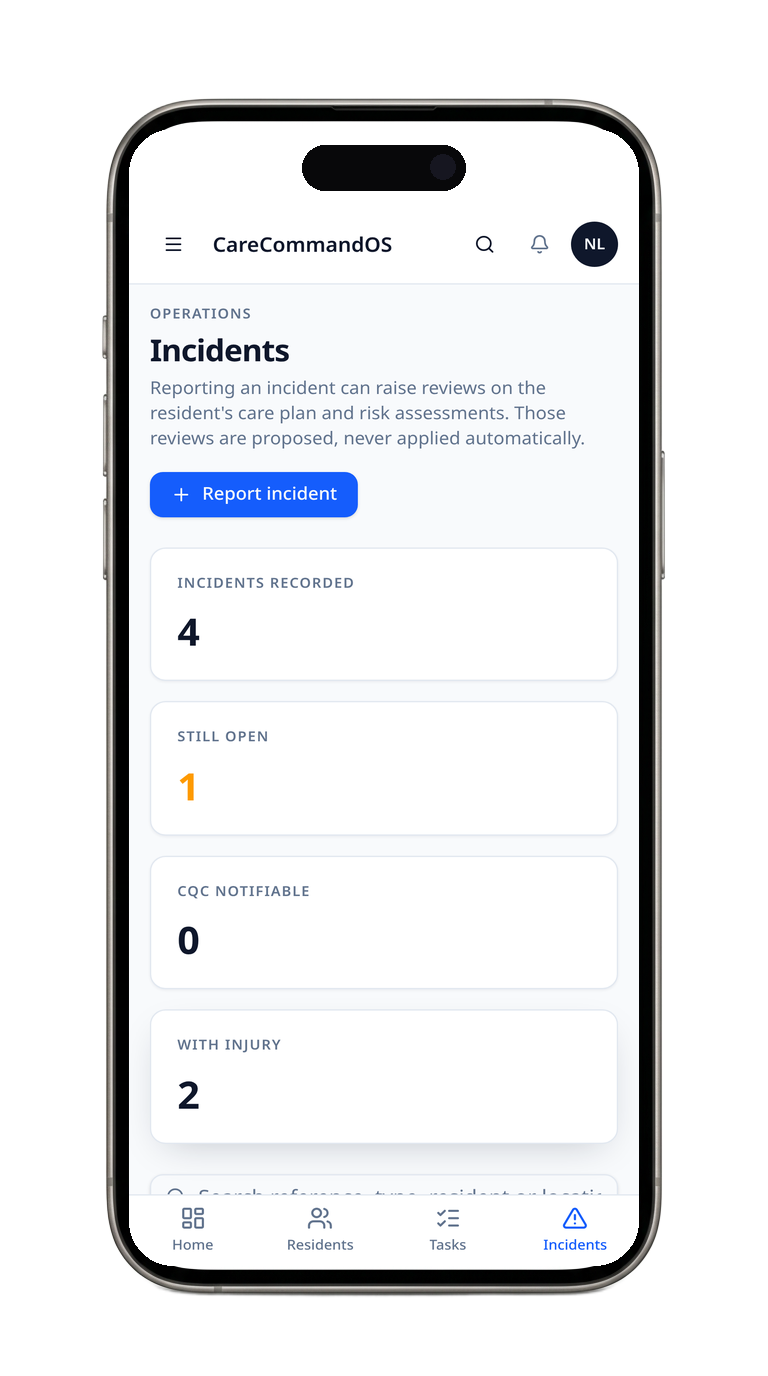
Reporting an incident on a phone in CareCommandOS (example data)

Screens shown with example data only.

Reporting is the easy part; the follow-through is where services get caught

Paper incident forms get completed and put in a tray. Someone reviews them, actions are agreed verbally, and the form is filed. Weeks later it is hard to show what was investigated, what changed, or whether the resident’s care plan and risk assessment were updated at all.

The same gap hides patterns. Three falls in the same corridor at the same time of night look like three separate forms until somebody counts them by hand.

CareCommandOS keeps the report, the investigation, the actions and the resident record in one chain, and reads the trends straight from the reports.

HOW IT WORKS

From the floor to lessons learned

01

Reported at the time, on a phone

A carer records a fall, injury, medication error, safeguarding concern or near miss where it happened, in minutes, with photographs if they help. Reports written while the detail is fresh are the ones worth investigating later.
02

Attached to the resident it concerns

Every incident joins the resident’s record, alongside their care plan and risk assessments. Anyone reading the plan can see what has actually happened, and a reviewer can see whether the plan changed afterwards.

03

A defined progression, not a free-for-all

Incidents move through set stages — reported, reviewed, investigated, actions agreed, closed — in order. Nothing can be marked closed before the steps in between are done, so “closed” means the same thing every time.

04

Actions with an owner and a date

Immediate actions and longer-term changes become tracked tasks with named owners and due dates, visible on the incident and in the manager’s overdue list. Investigation findings and lessons learned are recorded on the record itself.

05

Patterns instead of individual reports

Falls by time of day, location or resident, medication errors by stage, safeguarding concerns by theme — the trend view is drawn from the reports themselves, so a quality meeting starts from evidence rather than impressions.

06

Ready to evidence and notify

Each incident carries its full timeline: who reported it, what was done, what changed and when. Notifiable events can be exported with their evidence rather than reconstructed under time pressure.

Incidents feed governance, not a separate report

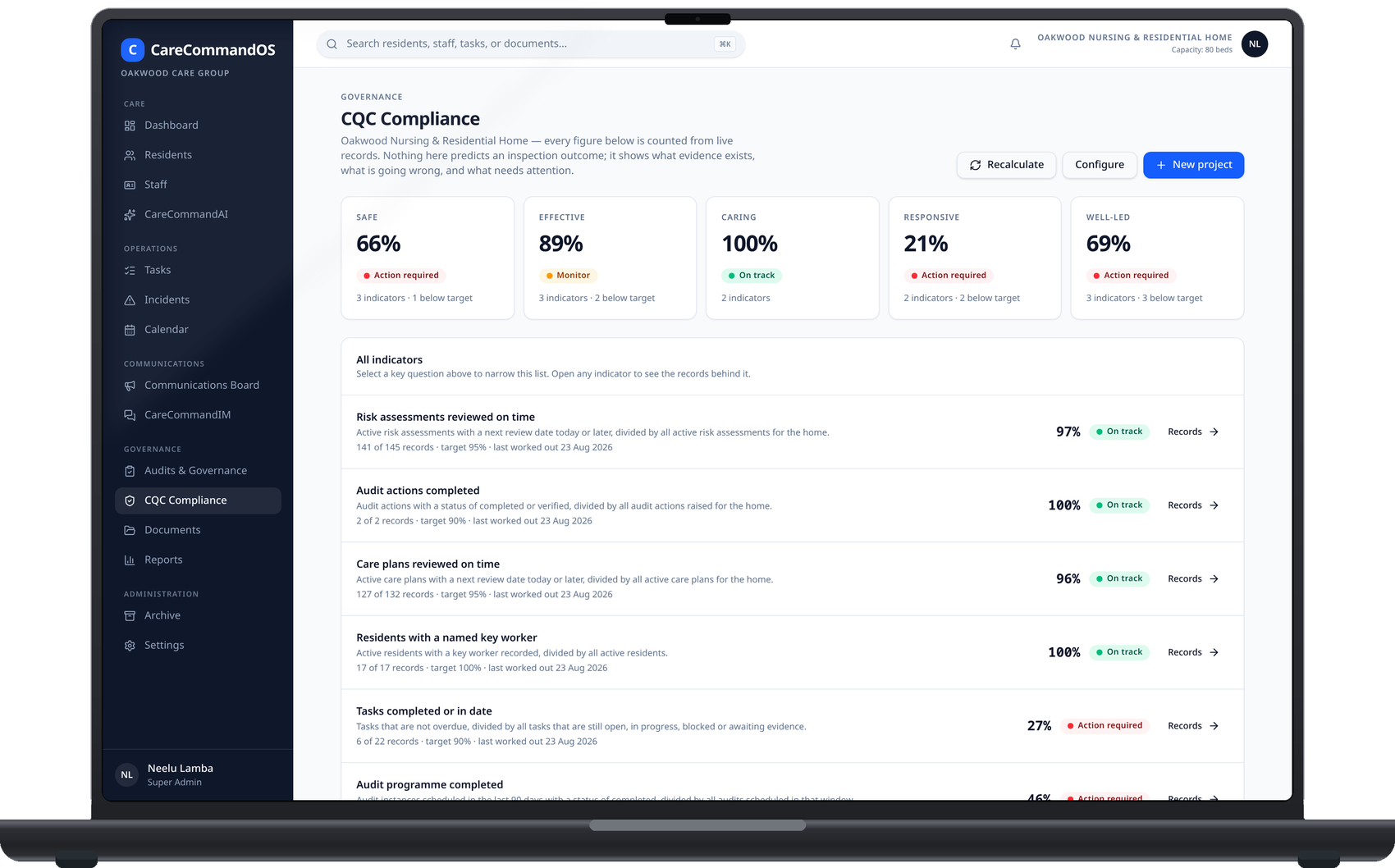
Because incidents, audits, care plans and actions share one record, incident volumes and overdue follow-up appear in the same governance view as audit results and reviews — across a single home or a whole operator.

Scores shown are CareCommandOS internal compliance indicators generated from your own records. They are not CQC ratings, judgements or assessments, and carry no regulatory status.

Governance indicators drawing on incident data in CareCommandOS (example data)

See an incident followed through with example data

A short demo shows a fall reported on a phone, the investigation, the actions it raises and the trend it feeds. Accounts are invite-only, so nothing is set up until you decide to go ahead.

Back to homepage